- O repozytorium
- Kolekcje
- Indeksy
- Historia przeglądania
-
Repozytoria RCIN
-
 INSTYTUT ARCHEOLOGII I ETNOLOGII POLSKIEJ AKADEMII NAUK
-
 INSTYTUT BADAŃ LITERACKICH POLSKIEJ AKADEMII NAUK
-
 INSTYTUT BADAWCZY LEŚNICTWA
-
 INSTYTUT BIOLOGII DOŚWIADCZALNEJ IM. MARCELEGO NENCKIEGO POLSKIEJ AKADEMII NAUK
-
 INSTYTUT BIOLOGII SSAKÓW POLSKIEJ AKADEMII NAUK
-
 INSTYTUT CHEMII FIZYCZNEJ PAN
-
 INSTYTUT CHEMII ORGANICZNEJ PAN
-
 INSTYTUT FILOZOFII I SOCJOLOGII PAN
-
 INSTYTUT GEOGRAFII I PRZESTRZENNEGO ZAGOSPODAROWANIA PAN
-
 INSTYTUT HISTORII im. TADEUSZA MANTEUFFLA POLSKIEJ AKADEMII NAUK
-
 INSTYTUT JĘZYKA POLSKIEGO POLSKIEJ AKADEMII NAUK
-
 INSTYTUT MATEMATYCZNY PAN
-
 INSTYTUT MEDYCYNY DOŚWIADCZALNEJ I KLINICZNEJ IM.MIROSŁAWA MOSSAKOWSKIEGO POLSKIEJ AKADEMII NAUK
-
 INSTYTUT PODSTAWOWYCH PROBLEMÓW TECHNIKI PAN
-
 INSTYTUT SLAWISTYKI PAN
-
 SIEĆ BADAWCZA ŁUKASIEWICZ - INSTYTUT TECHNOLOGII MATERIAŁÓW ELEKTRONICZNYCH
-
 MUZEUM I INSTYTUT ZOOLOGII POLSKIEJ AKADEMII NAUK
-
 INSTYTUT BADAŃ SYSTEMOWYCH PAN
-
 INSTYTUT BOTANIKI IM. WŁADYSŁAWA SZAFERA POLSKIEJ AKADEMII NAUK
-

Obiekt
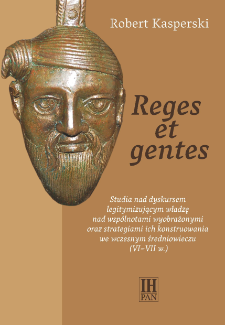
Tytuł: Reges et gentes : studia nad dyskursem legitymizującym władzę nad wspólnotami wyobrażonymi oraz strategiami ich konstruowania we wczesnym średniowieczu (VI-VII w.)

Inny tytuł:
Wydawca:
Miejsce wydania:
Opis:
Wydanie 1. ; 339 stron ; 21 cm ; Bibliografia na stronach 287-324. Indeks ; Streszczenie w języku angielskim.
Abstrakt:
The present study focuses on two main problems. The first one are discursive strategies of constructing the so-called imagined communities in the early Middle Ages. The second – strategies of the legitimisation of power over them. These discursive strategies could be divided into myths (and counter-myths), rituals, and – finally – classifications. Chapter One deals with an analysis of a certain theory that is supposed to explain the processes of emergence of barbarian peoples – the so-called model of ethnogenesis, which is commonly thought to be created by the German historian Reinhard Wenskus. As I have proved, the scholar did not develop the theory from scratch, but only presented in a condensed way the achievements of his numerous predecessors, among them of Walter Schlesinger. Chapter Two is devoted to an analysis of Isidore of Seville’s Historia Gothorum. My purpose was to trace the way in which Isidore constructed the Gothic (counter)myth to justify and legitimise the Goths rule over Spain. In constructing the imagined community of Goths, Isidore gave it an ethnographic identity, demonstrating at the same time that the Goths were the embodiment of courage-virtue (virtus), while their opponents – the Romans – had lost this trait and became non-manly people who did not deserve to rule over Spain. Chapter Three also focuses on the Historia Gothorum. I present an analysis of the way in which Isidore legitimised monarchical power of his patron, King Suintila. In his work, which is a “Gallery of Kings”, Isidore demonstrated that King Suintila was the greatest and best ruler of the Kingdom of the Visigoths. What is more, I explain Isidore’s endeavours to pave a way to the throne of Suintila’s son Ricimer. Isidore’s aim was – as I have established – to create favourable conditions for the rule of a new royal dynasty, founded by King Suintila. Chapter Four deals with the problem of “long hair” of the Merovingian ruling family. A have analysed both the question of the origins of their long hair, claiming – contrary to the belief of numerous scholars – that this custom could not have possibly originated as late as the sixth century, and its symbolic and ritual significance. In opposition to the followers of the ethnogenesis model, who associate long hair with the Germanic sacred monarchy, I have indicated that their long hair symbolised the special and powerful position of the royal family, standing above the Franks, and this position was manifested both by ritual and sexual behaviour. The Merovingian kings’ long hair symbolised the fact that the family stood above all social norms and laws. Chapter five focuses on the analysis of a certain debate that took place in the mid-sixth century at Constantinople. The debate was what to do with the Goths aft er the victory of Emperor Justinian I in Italy? Jordanes in his Getica expressed an opinion that they had to stay within the limits of the Roman Empire. He presented them as a civilised people with little in common with barbarians inhabiting lands on the other side of the limes. Jordanes argued that the Goths in fact were unable to return to their former homeland – Scandza. Procopius was of an opposite opinion, as he argued that the Goths were a barbaric people who wanted to live among other barbarians, and be independent from the emperor. Thus, if Jordanes’ Getica is the answer to the ideological message of Procopius’ De Bellis, another work by Procopius, De Aedificiis, was – as I have argued – the answer to Jordanes’ text. Procopius demonstrated in it that the Goths by nature were uncivilised people unable to live within the limits of the civilised world created – as he claimed – by Emperor Justinian.
Szczegółowy typ zasobu:
Identyfikator zasobu:
oai:rcin.org.pl:238964 ; 978-83-65880-08-6
Źródło:
IH PAN, sygn. I.10714 ; IH PAN, sygn. I.10713 Podr. ; kliknij tutaj, żeby przejść
Język:
Język streszczenia:
Prawa:
Licencja Creative Commons Uznanie autorstwa-Użycie niekomercyjne-Bez utworów zależnych 4.0
Zasady wykorzystania:
Zasób chroniony prawem autorskim. [CC BY-ND 4.0 Międzynarodowe] Korzystanie dozwolone zgodnie z licencją Creative Commons Uznanie autorstwa-Bez utworów zależnych 4.0, której pełne postanowienia dostępne są pod adresem: ; -
Digitalizacja:
Instytut Historii Polskiej Akademii Nauk
Lokalizacja oryginału:
Biblioteka Instytutu Historii PAN
Dostęp:
Kolekcje, do których przypisany jest obiekt:
- Instytut Historii PAN
- Instytut Historii PAN > Książki
- Instytut Historii PAN > Wydawnictwa Instytutu
- Instytut Historii PAN > Wydawnictwa Instytutu > Książki
Data ostatniej modyfikacji:
11 wrz 2025
Data dodania obiektu:
1 lip 2023
Liczba pobrań / odtworzeń:
879
Wszystkie dostępne wersje tego obiektu:
https://rcin.org.pl/ihpan/publication/275189
Wyświetl opis w formacie RDF:
Wyświetl opis w formacie RDFa:
Wyświetl opis w formacie OAI-PMH:
Obiekty Podobne
Kasperski, Robert (1981– )
Kasperski, Robert (1981– )
Kasperski, Robert (1981– )
Kasperski, Robert (1981– )
Kasperski, Robert (1981– ) Pac, Grzegorz (1982– ) Duczko, Władysław Nowak, Przemysław Ginter, Tomasz Wenta, Jarosław (1955– ) Teterycz-Puzio, Agnieszka (1971– ) Dobosz, Józef (1959– ) Myśliwski, Grzegorz (1966– ) Bogdan, Danuta
Michałowski, Roman (1949– )
Banaszkiewicz, Jacek (1947– )