- About project
- Collections
- Indexes
- Recently viewed
-
RCIN Repositories
-
 INSTYTUT ARCHEOLOGII I ETNOLOGII POLSKIEJ AKADEMII NAUK
-
 INSTYTUT BADAŃ LITERACKICH POLSKIEJ AKADEMII NAUK
-
 INSTYTUT BADAWCZY LEŚNICTWA
-
 INSTYTUT BIOLOGII DOŚWIADCZALNEJ IM. MARCELEGO NENCKIEGO POLSKIEJ AKADEMII NAUK
-
 INSTYTUT BIOLOGII SSAKÓW POLSKIEJ AKADEMII NAUK
-
 INSTYTUT CHEMII FIZYCZNEJ PAN
-
 INSTYTUT CHEMII ORGANICZNEJ PAN
-
 INSTYTUT FILOZOFII I SOCJOLOGII PAN
-
 INSTYTUT GEOGRAFII I PRZESTRZENNEGO ZAGOSPODAROWANIA PAN
-
 INSTYTUT HISTORII im. TADEUSZA MANTEUFFLA POLSKIEJ AKADEMII NAUK
-
 INSTYTUT JĘZYKA POLSKIEGO POLSKIEJ AKADEMII NAUK
-
 INSTYTUT MATEMATYCZNY PAN
-
 INSTYTUT MEDYCYNY DOŚWIADCZALNEJ I KLINICZNEJ IM.MIROSŁAWA MOSSAKOWSKIEGO POLSKIEJ AKADEMII NAUK
-
 INSTYTUT PODSTAWOWYCH PROBLEMÓW TECHNIKI PAN
-
 INSTYTUT SLAWISTYKI PAN
-
 SIEĆ BADAWCZA ŁUKASIEWICZ - INSTYTUT TECHNOLOGII MATERIAŁÓW ELEKTRONICZNYCH
-
 MUZEUM I INSTYTUT ZOOLOGII POLSKIEJ AKADEMII NAUK
-
 INSTYTUT BADAŃ SYSTEMOWYCH PAN
-
 INSTYTUT BOTANIKI IM. WŁADYSŁAWA SZAFERA POLSKIEJ AKADEMII NAUK
-
- Search in all Repository
- Literature and maps
- Archeology
- Mills database
- Natural sciences
Advanced search
Advanced search
Advanced search
Advanced search
Advanced search

Object
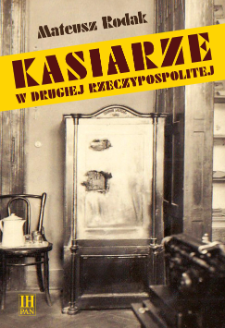
Title: Kasiarze w Drugiej Rzeczypospolitej

Subtitle:
Safecrackers in the Second Polish Republic
Publisher:
Instytut Historii im. Tadeusza Manteuffla Polskiej Akademii Nauk
Place of publishing:
Description:
Wydanie I. ; 327 stron : ilustracje (w tym kolorowe) ; 24 cm ; Nazwa wydawcy według formuły copyrightu ; Bibliografia na stronach 295-306. Indeksy ; Streszczenie angielskie.
Abstract:
In the nineteenth century, strongboxes became an increasingly popular form of securing money and valuables in the Polish lands. Towards the end of the century, local thieves began to master the complex art of opening strongboxes in response to this new fashion. In the first place, they did this by force, using all possible methods, but over time they became more and more skilled and used sophisticated tools (e.g. acetylene torches) to open the safe. At the turn of the twentieth century, some of the burglars operating in the big cities began to specialise in strongbox or safe burglaries. The press, using police jargon, referred to them as safecrackers. Their activity particularly intensified between the second and fourth decade of the twentieth century (with a break for the Great War). The turn of the 1930s is sometimes referred to as the ‘golden age’ of safecracking. The police were interested in around five hundred people throughout the country who were referred to as safecrackers in the records. The most numerous group was made up of safecrackers from Warsaw. During the interwar period, this community comprised around two hundred people. There are many myths surrounding safe burglars, the most important of which claims that this criminal group is exceptional compared to the criminal masses. Safecrackers have been referred to as the criminal ‘aristocracy’ (‘kings’) because of the profits they allegedly made from safe thefts and the complexity of breaking into strongboxes. The book, apart from describing the phenomenon and characterising the milieu, attempts to verify these myths, many of which remain the product of the interwar press, as well as cultural traces closer to us (dating from the late 1970s and early 1980s), in the form of extremely popular films about safecrackers.
Detailed Resource Type:
Resource Identifier:
oai:rcin.org.pl:238968 ; 978-83-66911-23-9
Source:
IH PAN, sygn. II.15678 ; IH PAN, sygn. II.15677 Podr. ; click here to follow the link
Language:
Language of abstract:
Rights:
Licencja Creative Commons Uznanie autorstwa-Bez utworów zależnych 4.0
Terms of use:
Zasób chroniony prawem autorskim. [CC BY-ND 4.0 Międzynarodowe] Korzystanie dozwolone zgodnie z licencją Creative Commons Uznanie autorstwa-Bez utworów zależnych 4.0, której pełne postanowienia dostępne są pod adresem: ; -
Digitizing institution:
Instytut Historii Polskiej Akademii Nauk
Original in:
Biblioteka Instytutu Historii PAN
Access:
Object collections:
- Digital Repository of Scientific Institutes > Partners' collections > Institute of History PAS
- Digital Repository of Scientific Institutes > Partners' collections > Institute of History PAS > Books
- Digital Repository of Scientific Institutes > Partners' collections > Institute of History PAS > Institute Publications
- Digital Repository of Scientific Institutes > Partners' collections > Institute of History PAS > Institute Publications > Books
- Digital Repository of Scientific Institutes > Literature
- Digital Repository of Scientific Institutes > Literature > Books/Chapters
Last modified:
Sep 12, 2025
In our library since:
Jul 1, 2023
Number of object content downloads / hits:
395
All available object's versions:
https://rcin.org.pl/publication/275184
Show description in RDF format:
Show description in RDFa format:
Show description in OAI-PMH format:
| Edition name | Date |
|---|---|
| Rodak, Mateusz, Pospolitacy, cuwaksi, powrotowcy : osadzeni w Więzieniu Karnym Warszawa-Mokotów (1918-1939) | Sep 12, 2025 |
Objects Similar
Rodak, Mateusz
Rodak, Mateusz
Rodak, Mateusz
Rodak, Mateusz
Rodak, Mateusz
Rodak, Mateusz
Rodak, Mateusz.
Wojtkowicz-Pawłowicz, Olgierd