- O repozytorium
- Kolekcje
- Indeksy
- Historia przeglądania
-
Repozytoria RCIN
-
 INSTYTUT ARCHEOLOGII I ETNOLOGII POLSKIEJ AKADEMII NAUK
-
 INSTYTUT BADAŃ LITERACKICH POLSKIEJ AKADEMII NAUK
-
 INSTYTUT BADAWCZY LEŚNICTWA
-
 INSTYTUT BIOLOGII DOŚWIADCZALNEJ IM. MARCELEGO NENCKIEGO POLSKIEJ AKADEMII NAUK
-
 INSTYTUT BIOLOGII SSAKÓW POLSKIEJ AKADEMII NAUK
-
 INSTYTUT CHEMII FIZYCZNEJ PAN
-
 INSTYTUT CHEMII ORGANICZNEJ PAN
-
 INSTYTUT FILOZOFII I SOCJOLOGII PAN
-
 INSTYTUT GEOGRAFII I PRZESTRZENNEGO ZAGOSPODAROWANIA PAN
-
 INSTYTUT HISTORII im. TADEUSZA MANTEUFFLA POLSKIEJ AKADEMII NAUK
-
 INSTYTUT JĘZYKA POLSKIEGO POLSKIEJ AKADEMII NAUK
-
 INSTYTUT MATEMATYCZNY PAN
-
 INSTYTUT MEDYCYNY DOŚWIADCZALNEJ I KLINICZNEJ IM.MIROSŁAWA MOSSAKOWSKIEGO POLSKIEJ AKADEMII NAUK
-
 INSTYTUT PODSTAWOWYCH PROBLEMÓW TECHNIKI PAN
-
 INSTYTUT SLAWISTYKI PAN
-
 SIEĆ BADAWCZA ŁUKASIEWICZ - INSTYTUT TECHNOLOGII MATERIAŁÓW ELEKTRONICZNYCH
-
 MUZEUM I INSTYTUT ZOOLOGII POLSKIEJ AKADEMII NAUK
-
 INSTYTUT BADAŃ SYSTEMOWYCH PAN
-
 INSTYTUT BOTANIKI IM. WŁADYSŁAWA SZAFERA POLSKIEJ AKADEMII NAUK
-
- Wyszukaj w całym Repozytorium
- Piśmiennictwo i mapy
- Archeologia
- Baza Młynów
- Nauki przyrodnicze
Wyszukiwanie zaawansowane
Wyszukiwanie zaawansowane
Wyszukiwanie zaawansowane
Wyszukiwanie zaawansowane
Wyszukiwanie zaawansowane

Obiekt
Tytuł: Cena niesuwerenności – Rzeczpospolita wobec przełomu stosunków rosyjsko-austriackich w świetle sprawy barona Karla Juliusa 1779–1781

Inny tytuł:
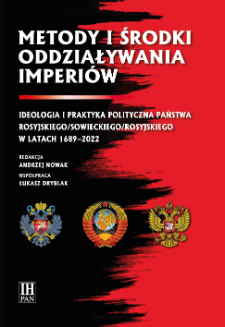
Metody i środki oddziaływania imperiów : ideologia i praktyka polityczna państwa rosyjskiego/sowieckiego/rosyjskiego w latach 1689-2022 ; Means and ways of empires : ideologies and political practices of the Russian/Soviet/Russian states between 1689 and 2022 ; Polityka rosyjska na dawnych terenach Rzeczypospolitej Obojga Narodów – aspekt porównawczy ; Russian Policy in the Former Territories of the Polish-Lithuanian Commonwealth: a Comparative Aspect
Twórca instytucjonalny:
Polska Akademia Nauk, Instytut Historii im. Tadeusza Manteuffla

Wydawca:
Instytut Historii im. Tadeusza Manteuffla Polskiej Akademii Nauk
Miejsce wydania:
Opis:
p. 169-189 ; Funded by a grant from the Ministry of Education and Science of the Republic of Poland ; Abstracts in Polish and English.
Abstrakt:
The development of Russian expansion towards the Black Sea reduced the importance of Prussia as Russiaʼs main ally in Central Europe and brought Russia closer to Austria. The Russian-Austrian rapprochement became a reality in 1780. For the Commonwealth, this meant that Vienna demanded the annulment of the sentence of the Sejm Court, which had sentenced the Austrian recruiter Karl Julius to banishment and the loss of his property. In the new political situation, Vienna was counting on Russiaʼs support for the demands made on King Stanisław August. The stance of Catherine II, who regarded the Polish-Lithuanian state as her exclusive sphere of influence, evolved from avoiding explicit declarations to agreeing to terms dictated by Austria, which Stanisław August had to accept. The king was forced to pay 30,000 ducats – three times the value of the property confiscated from Julius. This was the price the Commonwealth paid for the Russian-Austrian rapprochement and lack of sovereignty.
Czasopismo/Seria/cykl:
Historia Rosyjskiego Imperializmu
Strona pocz.:
Strona końc.:
Szczegółowy typ zasobu:
Identyfikator zasobu:
oai:rcin.org.pl:242538 ; 978-83-66911-81-9
Źródło:
IH PAN, call no. II.16454 ; IH PAN, call no. II.16453 Podr. ; kliknij tutaj, żeby przejść
Język:
Język streszczenia:
Prawa:
Creative Commons Attribution BY-ND 4.0 license
Zasady wykorzystania:
Copyright-protected material. [CC BY-ND 4.0] May be used within the scope specified in Creative Commons Attribution BY-ND 4.0 license, full text available at: ; -
Digitalizacja:
Institute of History of the Polish Academy of Sciences
Lokalizacja oryginału:
Library of the Institute of History PAS
Dofinansowane ze środków:
Ministry of Education and Science
Dostęp:
Kolekcje, do których przypisany jest obiekt:
- Repozytorium Cyfrowe Instytutów Naukowych > Kolekcje Partnerów > Instytut Historii PAN
- Repozytorium Cyfrowe Instytutów Naukowych > Kolekcje Partnerów > Instytut Historii PAN > Książki
- Repozytorium Cyfrowe Instytutów Naukowych > Kolekcje Partnerów > Instytut Historii PAN > Wydawnictwa Instytutu
- Repozytorium Cyfrowe Instytutów Naukowych > Kolekcje Partnerów > Instytut Historii PAN > Wydawnictwa Instytutu > Książki
- Repozytorium Cyfrowe Instytutów Naukowych > Piśmiennictwo > Książki/Rozdziały
Data ostatniej modyfikacji:
7 sty 2026
Data dodania obiektu:
1 lis 2024
Liczba pobrań / odtworzeń:
171
Wszystkie dostępne wersje tego obiektu:
https://rcin.org.pl/publication/279286
Wyświetl opis w formacie RDF:
Wyświetl opis w formacie RDFa:
Wyświetl opis w formacie OAI-PMH:
Obiekty Podobne
Zielińska, Ewa (1970– )
Stanisław August Poniatowski (1732–1798) Deboli, Antoni Augustyn (1747–1810) Cieciszowski, Adam Józef (1743–1783) Zielińska, Ewa (1970– ) Danilczyk, Adam
Stanisław August Poniatowski (King of Poland ; 1732-1798) Cieciszowski, Adam Józef (1743–1783) Zielińska, Ewa (1970– ) Danilczyk, Adam
Zielińska, Zofia (1944– )
Stanisław August Poniatowski (1732–1798) Stackelberg, Otto Magnus (1736–1800) Dukwicz, Dorota Zielińska, Ewa (1970– )