- O repozytorium
- Kolekcje
- Indeksy
- Historia przeglądania
-
Repozytoria RCIN
-
 INSTYTUT ARCHEOLOGII I ETNOLOGII POLSKIEJ AKADEMII NAUK
-
 INSTYTUT BADAŃ LITERACKICH POLSKIEJ AKADEMII NAUK
-
 INSTYTUT BADAWCZY LEŚNICTWA
-
 INSTYTUT BIOLOGII DOŚWIADCZALNEJ IM. MARCELEGO NENCKIEGO POLSKIEJ AKADEMII NAUK
-
 INSTYTUT BIOLOGII SSAKÓW POLSKIEJ AKADEMII NAUK
-
 INSTYTUT CHEMII FIZYCZNEJ PAN
-
 INSTYTUT CHEMII ORGANICZNEJ PAN
-
 INSTYTUT FILOZOFII I SOCJOLOGII PAN
-
 INSTYTUT GEOGRAFII I PRZESTRZENNEGO ZAGOSPODAROWANIA PAN
-
 INSTYTUT HISTORII im. TADEUSZA MANTEUFFLA POLSKIEJ AKADEMII NAUK
-
 INSTYTUT JĘZYKA POLSKIEGO POLSKIEJ AKADEMII NAUK
-
 INSTYTUT MATEMATYCZNY PAN
-
 INSTYTUT MEDYCYNY DOŚWIADCZALNEJ I KLINICZNEJ IM.MIROSŁAWA MOSSAKOWSKIEGO POLSKIEJ AKADEMII NAUK
-
 INSTYTUT PODSTAWOWYCH PROBLEMÓW TECHNIKI PAN
-
 INSTYTUT SLAWISTYKI PAN
-
 SIEĆ BADAWCZA ŁUKASIEWICZ - INSTYTUT TECHNOLOGII MATERIAŁÓW ELEKTRONICZNYCH
-
 MUZEUM I INSTYTUT ZOOLOGII POLSKIEJ AKADEMII NAUK
-
 INSTYTUT BADAŃ SYSTEMOWYCH PAN
-
 INSTYTUT BOTANIKI IM. WŁADYSŁAWA SZAFERA POLSKIEJ AKADEMII NAUK
-
- Wyszukaj w całym Repozytorium
- Piśmiennictwo i mapy
- Archeologia
- Baza Młynów
- Nauki przyrodnicze
Wyszukiwanie zaawansowane
Wyszukiwanie zaawansowane
Wyszukiwanie zaawansowane
Wyszukiwanie zaawansowane
Wyszukiwanie zaawansowane

Obiekt
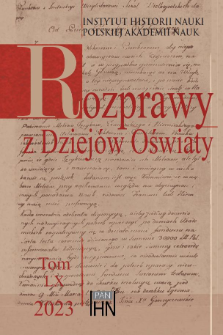
Tytuł: Organization of children’s nests for Polish children displaced from the Zamość region to the Warsaw District, 1942–1943

Wydawca:
Instytut Historii Nauki im. Ludwika i Aleksandra Birkenmajerów Polskiej Akademii Nauk
Miejsce wydania:
Data publ. on-line:
Typ obiektu:
Abstrakt:
The activity of children’s nests in the eastern part of the Warsaw district was associated with the displacement of Polish children from the Zamość region by the Germans in the winter between the end of 1942 and beginning of 1943. Many of them were separated from their mothers (parents) during racial selection in the transit camp in Zamość and deported, in six transports to three poviats of the district: Garwolin, Siedlce and Mińsk Mazowiecki. After being placed in “foster families” in this area, there was a need to provide the displaced children with care during the day, in the absence of their working caregivers (including mothers), or in the absence of proper care and entertainment. Local agencies of the Main Welfare Council came to the rescue by organizing six children’s nests in: Żelechów, Łaskarzew-Osada, Parysów, Stoczek Łukowski, Mordy and Łosice. Their aim was not only to manage their free time in the absence of working caregivers, in various forms, e.g. fun, education, etc., but also to improve their health, also by feeding displaced children. This was possible thanks to many months of financial and material support from the “Care Clubs” for displaced children, established by employees of institutions and enterprises from Warsaw. The mood of fun and joy during kindergarten classes meant that children from the Zamość region could, at least for a short time, forget about the difficult reality of the occupation and oft en forget about separation from their loved ones. After the liberation of these areas in the summer of 1944, the children’s nests were most likely liquidated and the displaced children left for their hometowns.
Czasopismo/Seria/cykl:
Tom:
Strona pocz.:
Strona końc.:
Szczegółowy typ zasobu:
Format:
Identyfikator zasobu:
0080-4754 ; oai:rcin.org.pl:243411
Język:
Język streszczenia:
Prawa:
Creative Commons Attribution BY-NC-ND 4.0 license
Zasady wykorzystania:
Właściciel praw autorskich:
Instytut Historii Nauki im. Ludwika i Aleksandra Birkenmajerów PAN
Lokalizacja oryginału:
Library of the Institute for the History of Science PAS
Dostęp:
Kolekcje, do których przypisany jest obiekt:
- Repozytorium Cyfrowe Instytutów Naukowych > Piśmiennictwo > Czasopisma/Artykuły
- Repozytorium Cyfrowe Instytutów Naukowych > Kolekcje Partnerów > Instytut Historii Nauki im. Ludwika i Aleksandra Birkenmajerów PAN > Biblioteka IHN PAN > Czasopisma
Data ostatniej modyfikacji:
10 sty 2025
Data dodania obiektu:
10 sty 2025
Liczba pobrań / odtworzeń:
140
Wszystkie dostępne wersje tego obiektu:
https://rcin.org.pl/publication/280490
Wyświetl opis w formacie RDF:
Wyświetl opis w formacie RDFa:
Wyświetl opis w formacie OAI-PMH:
Obiekty Podobne
Schramm, Tomasz (1949– ) Wołos, Mariusz (1968– )
Ubertowska, Aleksandra
Życzyńska-Ciołek, Danuta